

Tomorrowland Isn't Just a Music Festival Anymore - It's a Cultural Language
There's something kind of fascinating about a word that started as a section of Disneyland, became the world's most iconic electronic music festival, and now apparently describes... baby photoshoots on giant water lilies.
Yeah, you read that right.
A recent event at the Plantentuin Meise (that's the botanical garden in Meise, Belgium) sold out in under an hour. The deal? Parents could get their babies photographed sitting on enormous Victoria water lilies floating in the garden's ponds. And how did one organizer describe the frenzy? "This is a bit like the Tomorrowland for babies."
I love that. Not because it's quirky - though it absolutely is - but because it tells us something real about how deeply Tomorrowland has embedded itself into the cultural vocabulary, at least in Belgium and across much of Europe.
When a Brand Becomes a Metaphor
Think about it. When someone says "this is the Tomorrowland of X," everyone immediately understands what they mean. It's not just "a big event." It means: exclusive, hard to get tickets for, wildly popular, slightly magical, and surrounded by a kind of breathless hype that makes people set alarms and refresh browsers like their lives depend on it.
That's exactly what happened in Meise. Tickets gone in under an hour. Parents scrambling. Waitlists forming. For baby photos on lily pads.
The comparison works perfectly, and that's the point. Tomorrowland has transcended its own category. It's no longer just a festival in Boom, Belgium where DJs play to hundreds of thousands of people across multiple weekends. It's become shorthand for a certain kind of cultural phenomenon - the kind where demand wildly outstrips supply and the experience itself takes on an almost mythical quality.
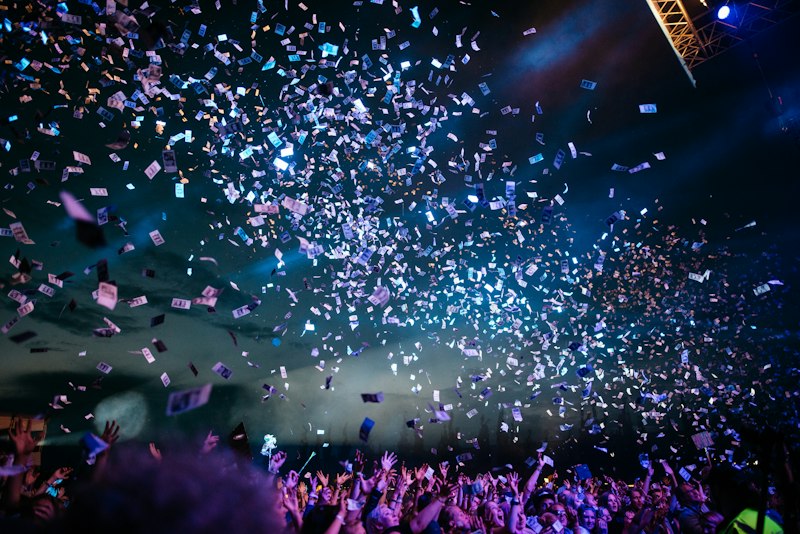
Not many events achieve that. The Super Bowl, maybe. Burning Man. Glastonbury, to some extent. But Tomorrowland might be the only one where the name itself has become a flexible adjective. Nobody says "this is the Glastonbury for babies." It just wouldn't land the same way.
Why Does Tomorrowland Hit Different?
I've been thinking about what makes Tomorrowland so sticky as a concept, beyond the obvious (massive stages, world-class DJs, those absolutely ridiculous production values). And honestly, I think it comes down to the storytelling.
Every year, Tomorrowland picks a theme. They build an entire narrative world around it. The stages aren't just stages - they're elaborate set pieces that look like they were ripped from a fantasy novel. The festival creates a sense of entering another reality, and they've been doing it consistently for over two decades now. That consistency matters. It builds mythology.
There's also the scarcity factor. Tickets sell out almost instantly every single year. That creates a feedback loop. The harder something is to get, the more people want it. The more people want it, the faster it sells out. And so the legend grows. Sound familiar? It's the exact same dynamic playing out with those baby lily pad photos in Meise.
Humans are wired this way. We want what we can't easily have. Tomorrowland figured that out early and never let the pressure valve release.
The Baby Lily Pad Thing Is Actually Genius
Let me circle back to Meise for a second, because I genuinely think it's a brilliant little event. The Victoria water lilies only bloom for a short period each summer, and they're strong enough to hold a small child - we're talking babies and toddlers, not teenagers. The photo opportunity is inherently limited by nature itself. You can't manufacture more lily pads. You can't extend the season.
So you get this perfect storm: a unique visual (your baby sitting on a giant lily pad is undeniably adorable), natural scarcity (the plants dictate the timeline), and now the Tomorrowland comparison fueling even more demand. The organizers barely need to market it. The story sells itself.
And here's the thing - it shows how powerful cultural references can be when they're genuinely earned. Nobody assigned Tomorrowland this status through a branding exercise. It happened organically because the festival delivered, year after year, on a promise that felt almost too big to keep.
Now a botanical garden in a quiet Belgian town is riding that same energy, just with pacifiers instead of pyrotechnics. If that isn't proof that Tomorrowland has become something bigger than a music festival, I don't know what is.
Some brands sell products. A rare few become part of how people describe the world around them. Tomorrowland landed in that second category, and a bunch of babies on lily pads just proved it.